cross
Pascha: The Love That Passed Through Death Into Life
Good Friday – Year A
Fr. Joonbin Lim
Preached: April 3, 2026
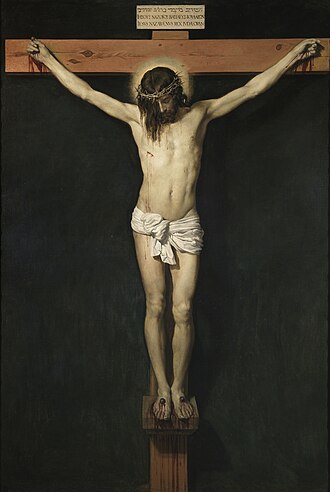
Today is Good Friday, the holy day on which we meditate on the Passion and Death of Jesus. Following the long tradition of the Church, today is the only day in the year when the Holy Sacrifice of the Mass is not celebrated. The Church also observes fasting and abstinence today, and in silence and self-denial we meditate deeply on the Lord’s Cross.
Today I reflected once again on what the Cross means to me. Ever since I was very young, there was always a crucifix in my room. At that time, I was too young to understand the meaning of the Cross or what the death of Jesus meant. But one thing is certain: the Cross was always close to my life.
Jesus on the Cross quietly watched over the years of my growth. He was always beside me, whether I was joyful or discouraged and in tears. One thing I have come to know clearly is this: Jesus was always with me. That is His love. There were times when I distanced myself from Jesus, but there was never a time when He distanced Himself from me.
Moreover, Jesus became man, went before us through suffering and death, and at last rose again. If there were no Resurrection in our faith, there would be no reason for us to be here. But what we must clearly understand is that the Resurrection was not glory given without cost. That glory came through the path of Jesus’ tears, suffering, obedience, and love. Therefore, we must look not only at the Resurrection, but also at the journey of suffering that led to it.
Then did Jesus fail by dying on the Cross? Was goodness defeated and evil victorious? What is the way for good to triumph over evil? How can the endless chain of evil be broken?
The answer is love. And the highest expression of that love is this: God became man to save us, and He died on the Cross. Yet that love did not end in death. Jesus died on the Cross, was laid in the tomb, and rose again, thereby conquering our sin and death and winning the final victory.
Therefore, the Passion, Death, and Resurrection of Jesus can never be separated. Through His Passion, Death, and Resurrection, Jesus passed over into the glory of God, that is, into eternal life. We call this holy passage the Pascha.
Pascha means “to pass over” or “to go across.”
The death of Jesus was not simply a tragedy. It was the fruit of a life of love poured out for humanity. Through the death of the Cross, the truth that “God is love” was revealed most clearly. Even in the midst of intense suffering, Jesus did not give up love. Rather, in order to save us, He accepted that suffering to the very end. The reason was our salvation, my salvation.
Therefore, the Cross we look upon today is not simply a symbol of pain and sorrow. The Cross is the heart of God who loved us to the end, and the gate of salvation through which we pass beyond sin and death into life. Today we must remain before that Cross and deeply meditate on the love of Jesus, who gave Himself completely for me.
Amen.
Christ is Beautiful!!!
Good Friday – Year A
Deacon Tom Vert
Preached: April 3, 2026
These past six weeks we have been talking about Beauty in our Lenten mission…the beauty of prayer, the Bible, Mass, the Rosary and Confession.
One key link in all these of course is Jesus!!
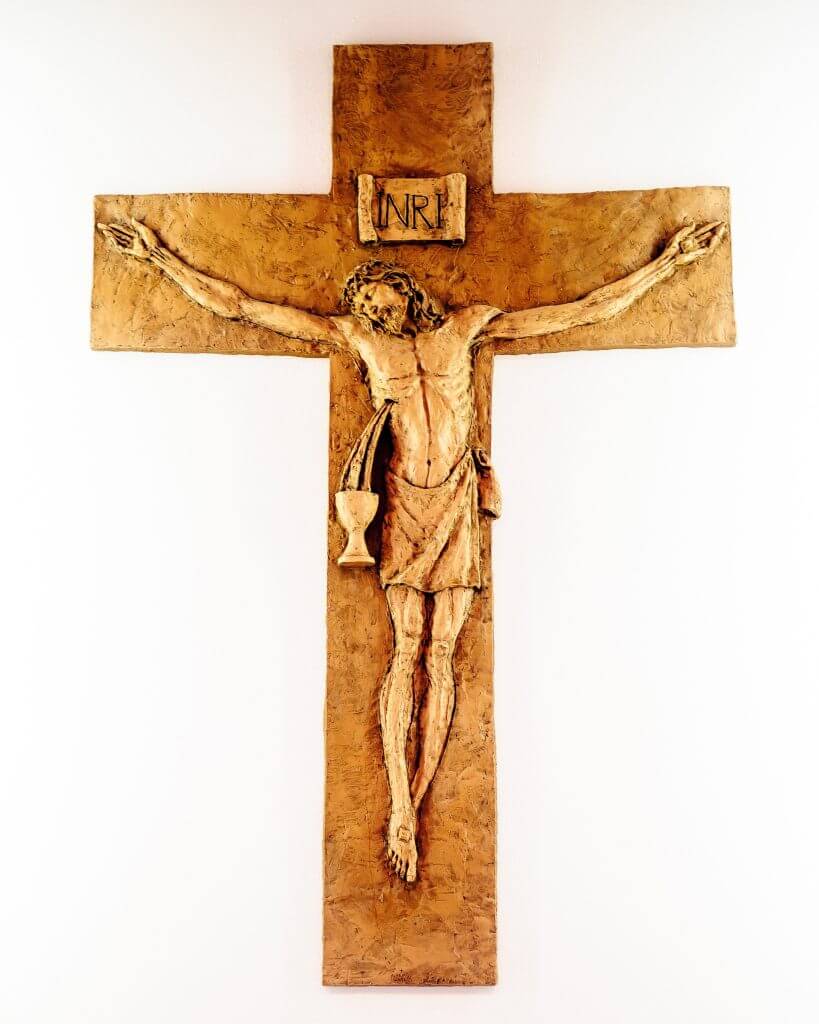
The one who we pray through, who reveals God to us, who gives himself to us in His Word and Body, who we meditate upon and who encounters us in God’s forgiveness. And yet, if look at the crucifix, the tortured, bloody, cut and wounded body, how can we say this is beautiful?
Our crucifix has Christ pictured one moment after he gave up his spirit, his final moment of death.
We may look at the cross, wonder, and ask the same question as St. Athanasius did 1700 years ago, “Why did you come down to us?”
And the only answer is the same answer as to why Christ is so beautiful…love! St. Peter tells us in first letter that Christ’s love is so great that “He himself bore our sins in his body on the cross, so that we might die to sins and live for righteousness; by his wounds we have been healed.” (1 Pt 2.24)
His love is shown in every celebration on this Easter weekend! From his great gift of the Eucharist on Holy Thursday, to the gift of sacrificial love on Good Friday, the significance of the Light of Christ as we enter the Easter Vigil, and the joy of the Resurrection on Easter morning, foreshadowing our own resurrection to eternal life with the Trinity in heaven!
The apostle John tells us “this is how we know what love is: Jesus Christ laid down his life for us.”
We look at Jesus gasping his last breath, looking upon us in love saying “greater love has no one than this: to lay down one’s life for one’s friends. You are my friends.” (John 15.13-14)
Truly, when we look at the crucifix today, let us say to ourselves “Christ is beautiful!
Fire And The Cross

20th Sunday Ordinary Time
Fr. Mark Gatto
Preached: August 14, 2022
This past week we had an exciting moment in the building of our new church. The cross for the top of our church was blessed by Bishop Crosby and then lifted up and put in place. At that moment something happened. One of the two workers who was on top of the crane to guide the cross into place, unfurled an orange flag saying “Every Child Matters,” symbol of the protests about the Residential School history.
Some were understandably disturbed by this, as it disrupted a special moment. But, as I reflected on this, I began to think that this was actually a grace filled moment. A time for us to really reflect on the true meaning of the cross.
“I came to bring fire to the earth.” Jesus says this as he is approaching Jerusalem and he knows that if he follows this path faithfully, that he will be facing rejection, suffering and death. If he continues a path that takes the side of the outsiders, of the poor, of the rejected, then he will come up against the power of the religious authorities, the empire, the rich.
St. Catherine of Siena used to say, “Be who God meant you to be and you will set the world on fire.” We are to have a passionate fire burning within us. The love of God burning within us. A fire that burns away all that is false, all that is opposed to the ways of the Kingdom of God. We are not to accept a Catholic Faith that is mediocre. We are not to accept living with indifference, indifferent to injustice, indifferent to the suffering in our world, indifferent to the needs of the weakest among us.
What Jesus has shown us is that God takes the side of the weak, the side of the scapegoat, the side of the victim. In fact, Jesus becomes the scapegoat, the victim as he dies on the cross.
The cross is not a symbol of dominance, not a symbol of power, nor a symbol of victory over others. It is a symbol of God taking the side of the weak, the oppressed, the scapegoat, the victims.
The Church is therefore also called to take the side of the weak, the poor, those made scapegoats by our society. The Church cannot walk away or remain silent in the face of the oppression of any human beings. At times in history we have been tempted to be on the side of the powerful, the rich, the winners. But, like Jesus we must lower ourselves down, must not worry about our own safety, our own success.
The Church, at its best, will always face opposition, will come under attack. Martyrs have been part of our story from day one until now. In various parts of our world today, Christians continue to face persecution and even martyrdom.
We need to make sure that if we are opposed within our society, it is because we are on the side of victims, the side of the poor, the side of the oppressed. We are to be on the side of those who face injustice and racism. We are to be on the side of those who are rejected or treated inhumanely.
The fire that Jesus is speaking about will not bring us a nice, comfortable and peaceful existence. It will lead us to being opposed by some.
St. Paul speaks of a “great cloud of witnesses.” The great Saints in our history should inspire us by the fire that burned within them living under the banner of the cross. The “Every Child Matter” flag, unfurled during the placement of the cross on top of our new church, was a reminder of the meaning of the cross. It was a reminder of times when the church has not lived by the way of the cross.
It is a challenge to our parish to embrace the cross, walking by the side of victims, the poor, those abandoned or rejected in our community. The cross is not about winning or dominating, it is about losing for the sake of justice, healing, reconciliation. This is the fire that Jesus longs to have kindled.