sharing
Seeing with the Compassion of Christ
11th Sunday Ordinary Time – Year A
Fr. Joonbin Lim
Preached: June 14, 2026
These days, whenever I look at myself in the mirror, I sometimes think of my father’s face. Even though it is my own face, I am surprised to see his expression in me. As I get older, I realize that I resemble him not only in appearance, but also in the way I speak, in my habits, and even in the way I think.
Then I began to ask myself, “What have I inherited from my father?” Perhaps my face, my character, my temperament, and some attitudes toward life came from him. But another question also came to my mind: “Then what have I inherited from God? What has God planted in my heart?”
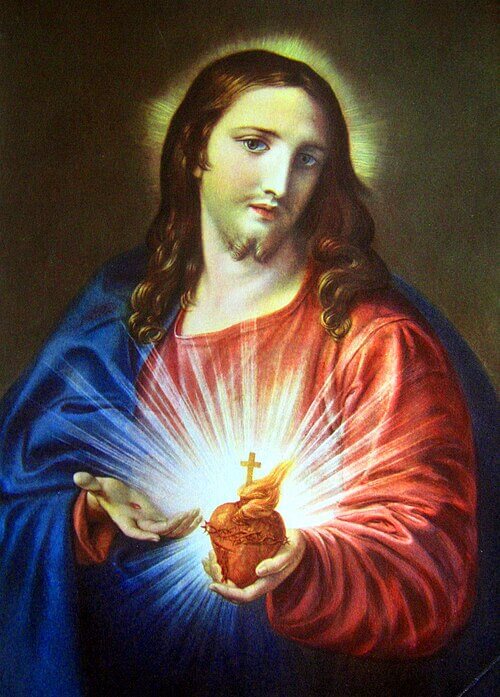
Today’s Gospel gives us one answer to that question. Jesus saw the crowds, and His heart was moved with compassion for them, because they were troubled and abandoned, like sheep without a shepherd.
Jesus did not see the people simply as a crowd. He saw their tired hearts, their wounds, their loneliness, and their lost souls. And He had compassion for them.
A few days ago, I was driving from the rectory to the church. To get to the church, I have to make a left turn, but there is no traffic light there. That day, I had many things on my schedule, so my mind was busy, and I felt a little rushed.
There was a person standing near the entrance of the road. For a moment, I became annoyed and thought, “Why is he standing there?” But after I parked the car, I saw him again. He had not been standing there to block the way. He had stopped for a moment because his leg was hurting. A little later, he began to walk again, limping.
When I saw that, I felt ashamed. I had failed to see his pain. Instead of seeing him as a person, I saw him only as an inconvenience in the middle of my busy schedule.
That experience made me think again about the compassion of Jesus. His compassion is not only a great feeling for special moments. It is the heart that helps us look again at the person in front of us in ordinary daily life. It is the heart that helps us see the hidden pain in another person, even when we feel inconvenienced.
In today’s Gospel, after Jesus feels compassion for the crowds, He calls His disciples and sends them out. He tells them to cure the sick, cleanse lepers, and drive out demons. Then He says, “You received without payment; give without payment.”
These words make me look back on my own life. When I came to Canada three years ago, I did not even have one million Korean won in my pocket. All I had were two pieces of luggage. I came to a new country with limited English and with very few people I knew. But I have been able to live here until now, not because of my own ability.
It has been because of your care, your love, your charity, and so much help. Some people prayed for me. Some welcomed me warmly. Some patiently listened to me, even when my English was not good. Some opened their hearts so that I could live here as a priest.
When we think about our lives, we realize that we are all living a borrowed life. We come into this world empty-handed, and we leave empty-handed. Our time, our health, our talents, our money, our position, the people around us, and even our life itself are entrusted to us by God for a while.
Therefore, what matters is not how much we have, but how we share what we have received. Our time, health, talents, the people around us, and even our life itself are all gifts that God has entrusted to us for a while. We are not called because we are perfect. We are called because we have first received love and mercy, and now we are invited to share that love with others.
Perhaps what the Lord asks of us today is not something great or dramatic. It may be to pause our busy hearts for a moment, to look again at the person in front of us, and to try to recognize the pain within that person.
Jesus saw the crowds, and His heart was moved with compassion. Today, let us ask the Lord to help us see others with His eyes. And may we share the love we have received through our small words and actions.

Become What You See, Be What You Receive – Fr. Mark

17th Sunday in Ordinary Time – Year B
Fr. Mark Gatto
Preached: July 29, 2018
St. Augustine in the church before the Blessed Sacrament on the Altar would say to the people, “Become what you see, Be what you receive.” Each time we celebrate this Eucharist we are challenged to become what we see and be what we receive. The Body of Christ. What kind of life, what vision of humanity does the Eucharist call us to live?
Last week I saw a car with the license plate, “JESUSNMe”. Yes, each of us is called to a personal relationship with Jesus. We are to be intimate friends of Jesus. But it is inadequate if it reflects a narrow individualistic vision of humanity. Christianity offers a vision of humanity which is communal, we do not go through life as disconnected individuals on the way to heaven myself. We go through life united as brothers and sisters on our way to that great heavenly banquet.
In the Gospel story of the multiplication of the loaves, Jesus sees the hungry crowds and asks his disciples to feed them. They take what little they have, that does not seem to be enough. But, working together with Jesus, they provide enough for all, no one is left out. This miracle, like the Eucharist, offers a vision of humanity. Human beings are fundamentally created by God to be in communion with each other, to share, to work for a common good. In this sharing we find our happiness and peace as human beings and as a human family.
Not surprising that the Eucharist, the greatest prayer of the Church, is in the context of a meal. Meals and banquets are times of sharing, in a truly human way. A survey of teenagers many years ago indicated that teenagers who live in families that share a meal together 5 or more times a week have fewer criminal issues and do better in school. Teenagers in families that share one or less meals a week have more issues with crime, do less well in school.
Our modern commercial advertising industry has worked very hard for many decades now to convince us that human beings are selfish by nature. Advertising in all its forms has made a great effort to convince us to go shopping, to get more, to be rooted in our lowest selfish instincts. To get what I want and forget about what others need. But the Christian vision of humanity revealed in Jesus and reflected in the Eucharist says that we human beings were created by nature to share, to care for others.
Bringing happiness to others increases your chance of being happy, seeking happiness only for yourself decreases those chances.
A consumer vision of society wants to convince us to be selfish, to get what you want and ignore the needs of others. The result of such a vision is that many are left out.
A Christian vision of society, seen in the Eucharist, calls us to be people who share, who care for each other. The result of this vision is in the multiplication of the loaves, there is enough for all. No one is left out.
St. Augustine says, “Become what you see”. In this Eucharist what do we see? A people gathered at a Sacred Meal, in communion with Jesus and one another as brothers and sisters. A people who are all equal and all to share in the life of God.
Imagine a world, imagine a country, imagine a city, imagine a family, where each see other as one family, where we see all children as our children. Where we try to share with each other so that there is enough for all and no one is left out. Then we would be faithful to the vision of this Eucharist.