2nd Sunday of Easter
Fr. Joonbin Lim
Preached: April 12, 2026
There is a scene from a film that has stayed in my mind for a long time. A man kidnaps a neighbor’s child, demands ransom, and in the end kills the child. He is sent to prison.
One day, the child’s mother goes to see him. And he says to her, “After I came to prison, I came to believe in God, and my sins have been forgiven.” Then the mother cries out, “I have not forgiven you, so who says you are forgiven?” That cry is not simply anger. It is the cry of someone whose pain has not been seen or understood.
We see something similar in our world. Some start wars, lead countless people to their deaths, and still ask God to protect them. But Scripture speaks clearly: “Though you pray the more, I will not listen; your hands are full of blood.” God does not look only at the words of prayer. He also sees a person’s life and heart.
So what is the problem? The problem is speaking too easily about forgiveness without facing the suffering one has caused. True repentance does not end with saying, “I have sinned.” It begins when a person finally sees the wounds and tears his actions have left in another person.
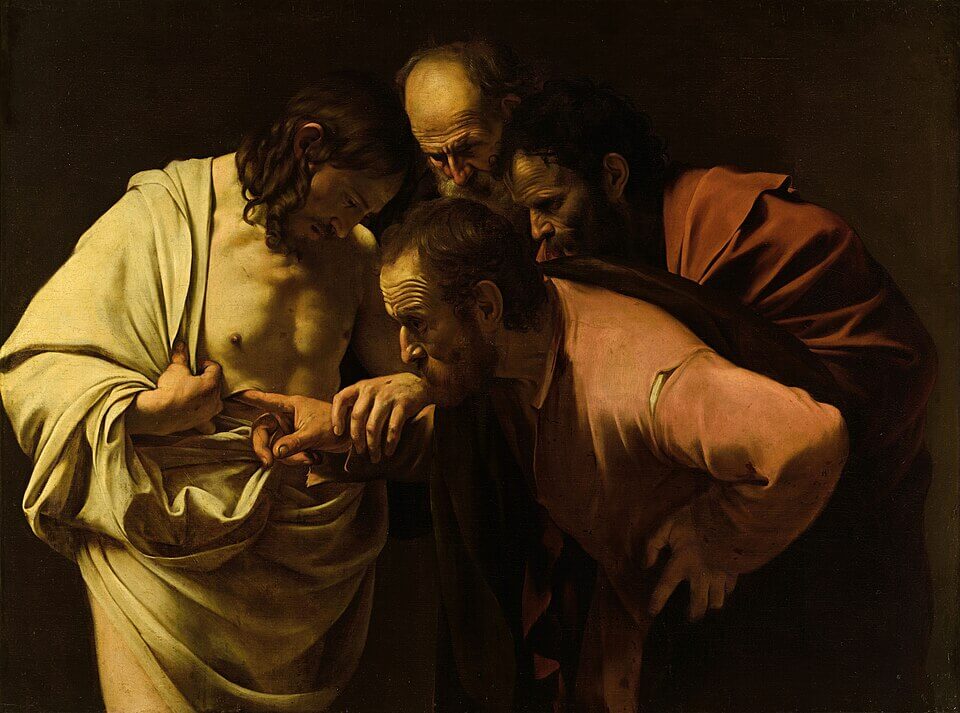
But in today’s Gospel, Thomas shows us something very different. He does not want to believe in the Resurrection without the wounds. The marks of the Cross are still there, so how can he speak of Resurrection as if nothing had happened?
And the risen Jesus does not rebuke Thomas. Instead, he shows him his wounds. He does not hide the marks of the nails or the wound in his side. Jesus rose not by erasing his wounds, but by carrying them into new life.
For Jesus did not remain distant from human suffering; he entered into it. He took upon himself the burden of our sin and made himself one with those who suffer. That is why the salvation of Christ is not just an idea, but the living love of God entering into the brokenness of human life.
So the Resurrection is not cheap comfort that cancels suffering. It is love that has passed through suffering and brought it to victory.
That is why faith is not about appearing perfect on the outside. Faith is not the absence of pain, doubt, or questions. Rather, faith grows when we hold on to God even when life is difficult to understand, and it deepens when we do not turn away from the tears of others.
Brothers and sisters, repentance is not complete when I see only my own sin. It begins to become real when I begin to see the tears my sin may have caused in others. The Lord does not call perfect people. He calls those who are willing to stand before him with a truthful heart. So before we say too easily, “I have been forgiven,” let us first become people who understand more deeply and who are willing to grieve more honestly