16th Sunday Ordinary Time
Fr. Joonbin Lim
Preached: July 19, 2026
There is one book I have read that remains especially memorable to me: Eichmann in Jerusalem by the philosopher Hannah Arendt. It deals with the trial of Adolf Eichmann, a Nazi official who helped organize the deportation of countless Jewish people to concentration and extermination camps during the Second World War.
At his trial, Eichmann claimed that he had simply followed orders. From this, Arendt developed the idea of “the banality of evil.” Ordinary people can take part in great evil when they stop thinking for themselves, ignore their conscience, and obey unjust orders.
But there was an even deeper problem. The Nazi regime believed that it had the right to judge the value of other human beings. It decided who was superior, who deserved to live, and who should be removed. It treated certain people like weeds to be pulled out and acted as though it were the owner and judge of the world.
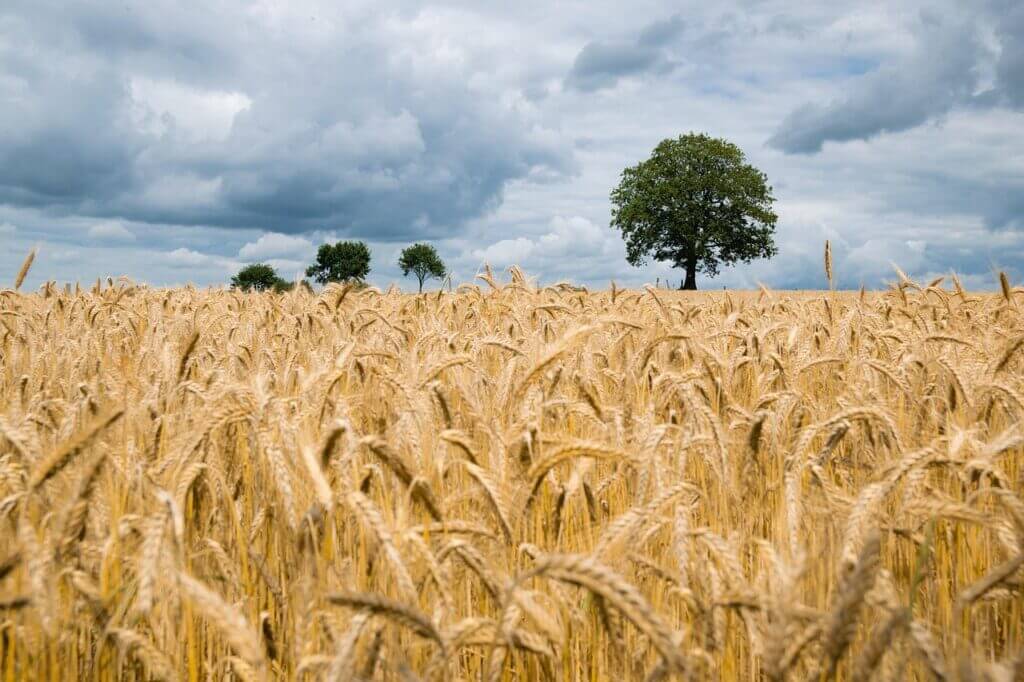
In today’s Gospel, the servants see weeds growing among the wheat and ask, “Do you want us to go and gather them?” But the landowner answers, “No, for in gathering the weeds, you would uproot the wheat along with them. Let both of them grow together until the harvest.”
The servants are not the owners of the field, and they cannot perfectly judge what is wheat and what is weed. In the same way, we may judge whether an action is right or wrong, but we cannot pass final judgment on the whole person.
We do not fully know another person’s heart or how that person may change. Final judgment belongs to God alone. This danger does not belong only to the past. Even today, nations and those in power often act as though they have the right to decide the lives and futures of others.
In Gaza, many Palestinian civilians have suffered death, destruction, and the loss of dignity through the military actions of the Israeli government. The Holocaust and the war in Gaza are not identical. Yet whenever an entire group is labeled as dangerous and its suffering is justified, we are reminded of the tragedies of the past.
We see a similar danger in the conflict between the United States and Iran, and in the war between Russia and Ukraine. When nations see the other side only as an enemy to be defeated or removed, human lives become numbers and violence continues.
This does not mean that all wars have the same causes or that all sides bear equal responsibility. We must distinguish aggression from defense, confront injustice, and protect the weak. But when people stop seeing the other side as human and begin treating them as weeds to be removed, they take the place of God as judge.
Eichmann could not escape responsibility by saying, “I was only following orders.” Every person has a duty to ask whether an order, or the actions of one’s own nation, are morally right. Yet judging an evil action is not the same as condemning the whole person. Jesus clearly named sin, but he did not abandon the sinner. He always left the door open to repentance.
We, too, easily judge others. We may say, “That person will never change,” or “That person does not deserve forgiveness.” At that moment, we place ourselves in the position of the owner of the field.
Dear brothers and sisters, judgment belongs to God. We are not the owners of the field; we are people growing together within it. Let us courageously oppose injustice, but never treat any person or people as less than human. Until the harvest comes, our task is not to remove others, but to bear good fruit through love, justice, and mercy.