1st Sunday of Lent – Year A
Fr. Mark Gatto
Preached: February 22, 2026
Evil. We do not need to look far in human history or in our world news to see the reality of evil within our world.
Our Catholic Faith accepts that evil exists, and we are all capable of evil. So, it is important for us to understand the reality of evil, the roots of evil. We should face it openly, otherwise it finds a way to sneak into our lives and into our institutions. As we have seen so clearly these past years, evil is able to enter the church as well.
On this First Sunday of Lent, the Church gives us a set of readings that all reflect on the reality of evil. It gives images of evil as a serpent, as the devil. But, the underlying insights are what really matter in these stories.
First, the story of the Fall from the Book of Genesis. This story reveals much about the psychology of sin and evil. After the creation of the man and woman, who are in the garden of Eden, we see sin and evil enter the world. The serpent tempts the woman by convincing her that she is entitled to more. Instead of being grateful for all that she has, the woman is focused on what she does not have, what she is not able to have.
Sin and evil so often enters our lives when we stop being grateful, when we are obsessed with what we do not have. Then we begin to be resentful and feel we have the right to do whatever in order to get something.
Next, she brings the man into this and gives some to him. Again, when we fall into evil ways we often try to bring others along with us. We justify our behaviour by having others join us. The result of the evil is that the man and woman are full of shame, they have to cover themselves up, afraid to be seen. We know our behaviour is falling into sin and evil when we need to hide, to cover it up. Later in the story we will see the woman blaming the serpent and the man blaming the woman.
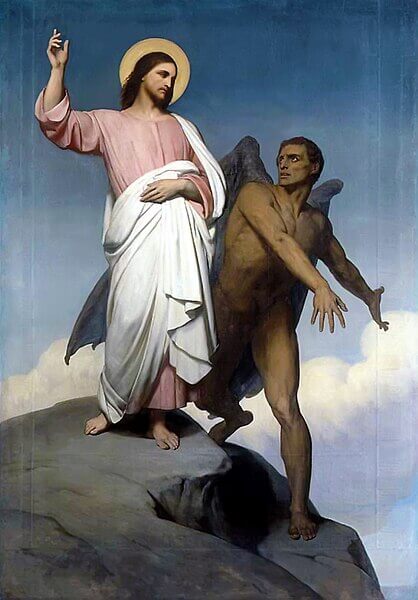
Again, our tendency to blame others instead of taking responsibility for what we do. This story in Genesis is a very insightful study of the reality of evil and how it enters our lives. In the Gospel, we see the story of the Temptation of Jesus in the desert. We see the image of the devil tempting Jesus before he begins his ministry. The Temptation to follow a path different from the path of God. Instead of self-sacrificing love, to embrace power. Jesus is tempted to a path so often followed by leaders in this world, the way of power, success and domination.
But, Jesus is called to a path of love and the gift of his very self. All of us can be tempted to choose power over others, rather than service, to want to be successful in the eyes of others, rather than do what is right, to win rather than to do what is good and true.
Evil enters our lives when we stop being grateful for what we have and become focused on getting what we do not have.
Evil enters our lives when we give into lies, rationalizing, blaming others.
Evil enters our lives through falsehoods, lies, lack of truth. The greatest way to avoid evil is utter honesty. Be ruthlessly honest with yourself and with thers.
Lies are like opening a door that allows evil to enter our lives and our institutions. Evil is a reality, understand it and face it honestly.